Certified Canadian Crypto Auditor to assist with possible Recovery, Reporting and detailed Investigations

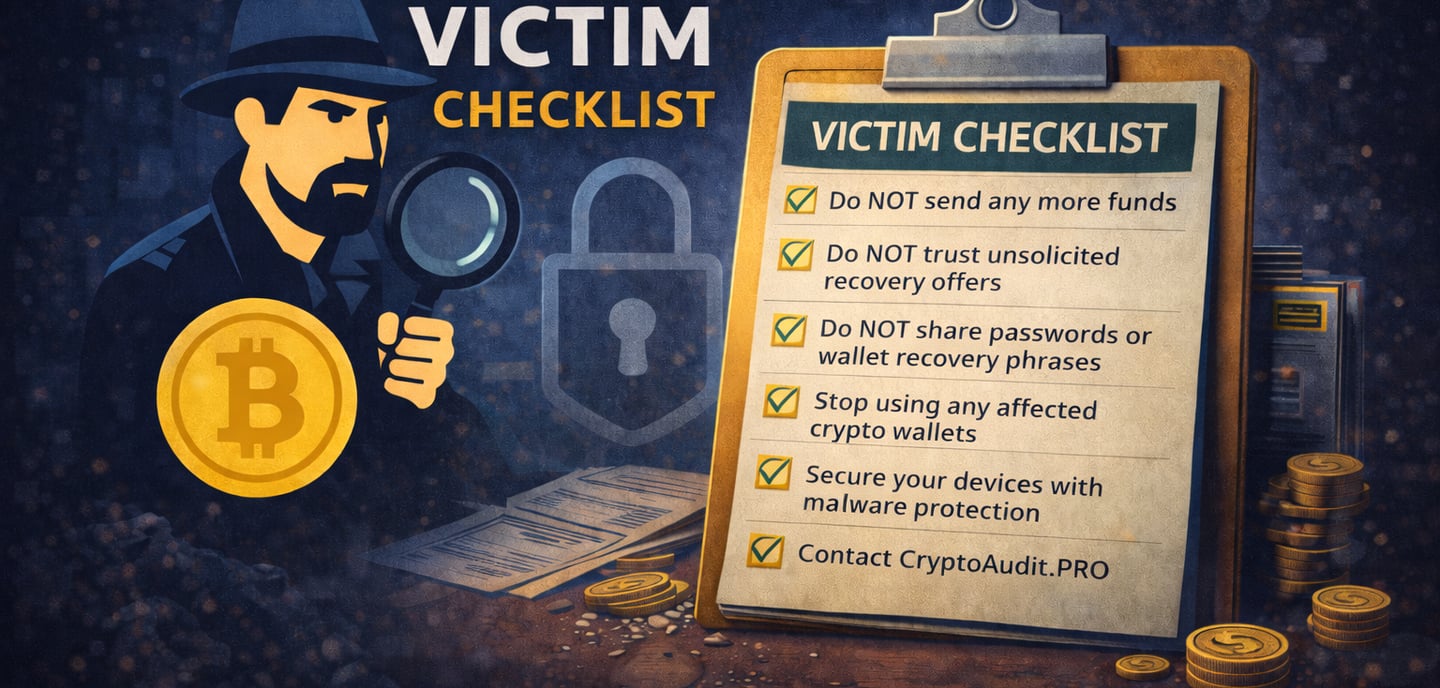
✅ Step-by-Step Crypto Victim Checklist
✅ Step 1: Do NOT send any more funds
Do not send additional cryptocurrency, fees, taxes, “unlock” payments, or verification charges — even if someone claims this is required to recover your funds.
This is one of the most common follow-up scam tactics.
✅ Step 2: Do NOT trust unsolicited recovery offers
Anyone who contacts you claiming they can recover your crypto — especially via Telegram, WhatsApp, email, or social media — is very likely running another scam.
No legitimate service can guarantee recovery.
✅ Step 3: Contact Bank or card provider immediately
If you shared or used:
Bank account details
Credit or debit card information
Wire, ACH, or card payments
Contact your bank or provider immediately to report potential fraud and secure your accounts.
✅ Step 4: Do NOT share passwords or recovery phrases
Never share:
Wallet seed phrases (12–24 words)
Private keys
Exchange passwords
Authentication or verification codes
⚠️ If any of these were shared, they must be considered compromised immediately.
✅ Step 5: Stop using any affected crypto wallets
If a wallet was involved in the scam:
Stop using it entirely
Do not send or receive funds
Create a new, secure wallet for future use
This reduces the risk of further losses or tracking.
✅ Step 6: Secure your devices with malware protection
Install reputable malware and virus detection software and run a full system scan.
Scammers often deploy:
Keyloggers
Browser malware
Remote access tools
✅ Step 7: Do NOT install software sent by scammers
Never download or install:
“Recovery tools”
“Wallet repair software”
Unknown browser extensions
These are almost always malicious.
✅ Step 8: Do NOT allow remote access to your computer
Never allow access via:
AnyDesk
TeamViewer
Remote Desktop
Screen-sharing platforms
Legitimate investigators do not require remote access to your device.
✅ Step 9: Secure your email and exchange accounts
Immediately:
Change passwords
Enable two-factor authentication (2FA)
Review login activity for suspicious access
Your email account is often the gateway to further compromise.
✅ Step 10: Preserve all evidence
Do not delete:
Transaction IDs (TXIDs)
Wallet addresses
Emails, messages, or chat logs
Screenshots
Websites or profiles used in the scam
This information is critical for investigation and reporting.
✅ Step 11: Be cautious when posting in public forums
Scammers actively monitor forums and social media for victims.
Avoid publicly sharing:
Wallet addresses
Loss amounts
Personal contact details
✅ Step 12: Report the scam to appropriate authorities
Depending on your country, consider reporting to:
Local law enforcement
National cybercrime units
Consumer protection agencies
Reports are more effective when supported by detailed documentation. We can help you produce a proper audit & report for authorities / exchanges.
✅ Step 13: Speak with a legitimate crypto investigation professional
Before taking further action, consult an independent professional who can:
Review what happened
Explain what is realistically possible
Help prevent further losses
✅ Step 14: Request a confidential consultation with CryptoAudit.Pro
We offer a free 15-minute confidential consultation to review your situation, explain next steps, and determine whether a professional investigation would provide value — without guarantees or pressure.
⚠️ Important Warning
If anyone:
Guarantees recovery
Pressures you to act urgently
Asks for secrecy
Stop immediately. These are strong indicators of a follow-up scam.
✅ Final Reminder
After a crypto scam, the safest next step is clarity, not urgency.
This checklist is designed to help you protect yourself and avoid further harm. This does NOT replace legal advice and is presented as a FREE recommendation of potential actions to help protect yourself from further harm or loss of funds.